
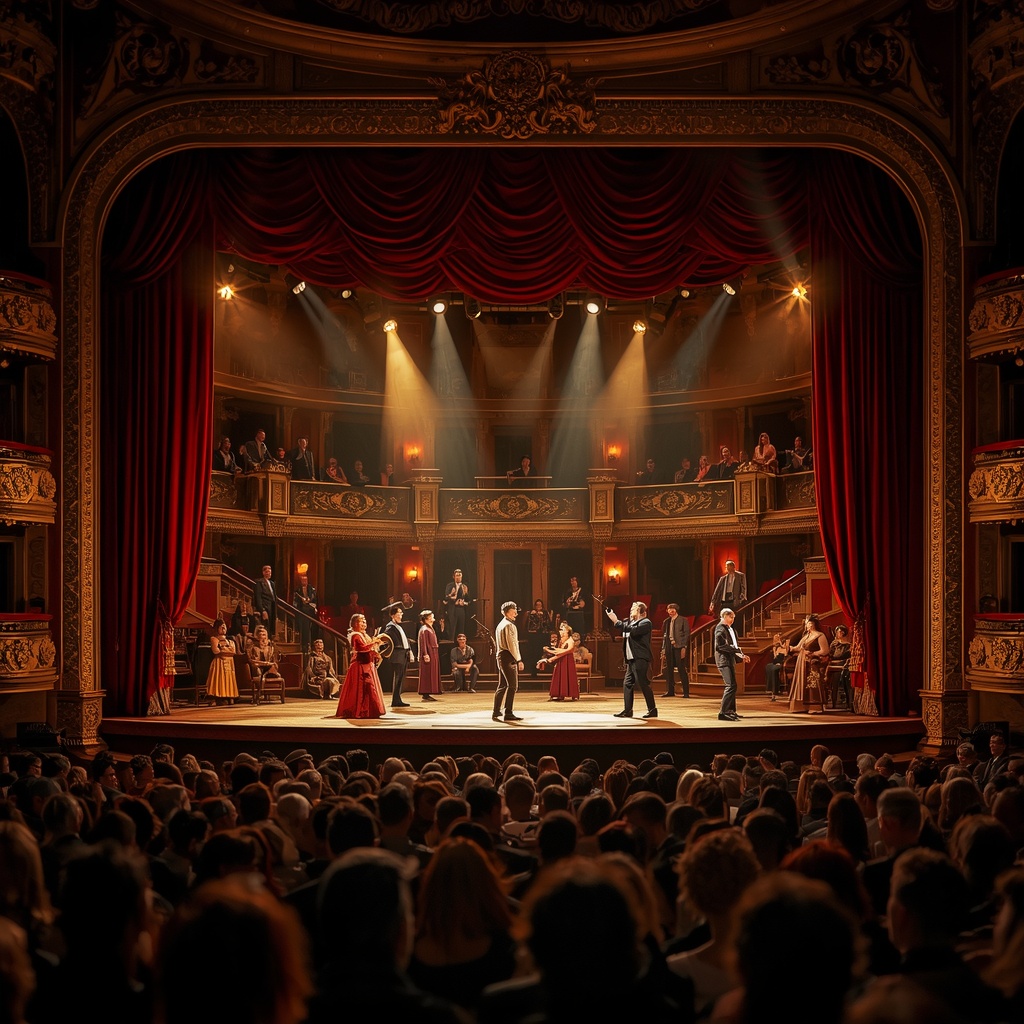
Theater is one of the oldest and most influential art forms in human civilization. Long before the invention of cinema and television, people gathered in open spaces, temples, and amphitheaters to watch stories unfold through live performance. Over thousands of years, theater has evolved, yet it has always remained a reflection of human culture, beliefs, and emotions.
From ancient rituals to modern stage productions, theater has continuously shaped and been shaped by society.
🏛️ Ancient Roots of Theater
The origins of theater can be traced back to ancient civilizations, particularly in Greece, where it developed as part of religious ceremonies honoring gods such as Dionysus. These early performances gradually evolved into structured dramatic forms, including tragedy and comedy.
Playwrights such as Euripides and Sophocles created works that explored profound themes like fate, justice, morality, and human suffering. Their plays were performed in large amphitheaters and remain foundational to Western theater traditions today.
At the same time, other cultures such as ancient India, China, and Egypt also developed rich theatrical traditions, proving that performance art is a universal human expression.
🎭 Theater as a Reflection of Culture
Throughout history, theater has served as a mirror of society. It reflects the values, fears, struggles, and aspirations of the time in which it is created.
In medieval Europe, theater was often used to teach religious stories to the public. During the Renaissance, it became more focused on human emotion and individual experience. In modern times, it has expanded to address political, social, and psychological themes.
Because of this adaptability, theater remains relevant across generations and cultures.
🎬 The Golden Age of Drama
One of the most influential periods in theater history was the Renaissance, particularly in England. This era gave rise to legendary playwrights such as William Shakespeare, whose works continue to be performed worldwide.
Shakespeare’s plays explored universal human emotions—love, jealousy, ambition, betrayal, and power. His ability to combine poetic language with deep psychological insight helped elevate theater into a respected literary and artistic form.
This period established many conventions still used in modern drama, including complex characters, structured plots, and thematic depth.
🌍 Theater Across Cultures
Theater is not limited to one culture or tradition. Every society has developed its own form of performance art. For example, Japanese Noh and Kabuki theater, Indian classical drama, and African storytelling traditions all offer unique approaches to performance.
These diverse traditions highlight the universality of theater as a form of expression. Despite differences in style, language, and structure, all forms of theater share the goal of telling stories and connecting with audiences emotionally.
🎭 Theater and Social Change
Throughout history, theater has often played a role in social and political change. Playwrights and performers have used the stage to challenge authority, question norms, and highlight injustice.
In many societies, theater has been a safe space for discussing controversial topics and encouraging public dialogue. This ability to provoke thought and inspire reflection makes theater a powerful cultural tool.
🎬 Modern Influence and Legacy
Today, theater continues to influence other art forms, including cinema and television. Many modern films and TV shows are inspired by theatrical storytelling techniques, character development, and dramatic structure.
Despite technological advancements, theater remains a vital part of cultural life. It continues to attract audiences who seek authentic, live experiences that cannot be replicated on screen.
🎭 Conclusion
Theater has played a fundamental role in shaping human culture for thousands of years. From ancient rituals to modern performances, it has evolved while maintaining its core purpose: to tell stories that reflect the human experience.
Its influence extends beyond the stage, shaping literature, cinema, and society itself. As long as people continue to seek meaning, emotion, and connection, theater will remain an essential part of human expression.